

BBC News:
China is holding its biggest-ever show of military force in the air and seas around Taiwan, including the firing of ballistic missiles.
The military exercises follow a visit to the island by the Speaker of the US House of Representatives, Nancy Pelosi.
China sees Taiwan as a breakaway province that will eventually be under Beijing’s control again.
However, Taiwan sees itself as an independent country, with its own constitution and democratically-elected leaders.
China’s President Xi Jinping has said “reunification” with Taiwan “must be fulfilled” – and has not ruled out the possible use of force to achieve this.
Where is Taiwan?
Taiwan is an island, roughly 100 miles from the coast of south east China.
It sits in the so-called “first island chain”, which includes a list of US-friendly territories that are crucial to US foreign policy.
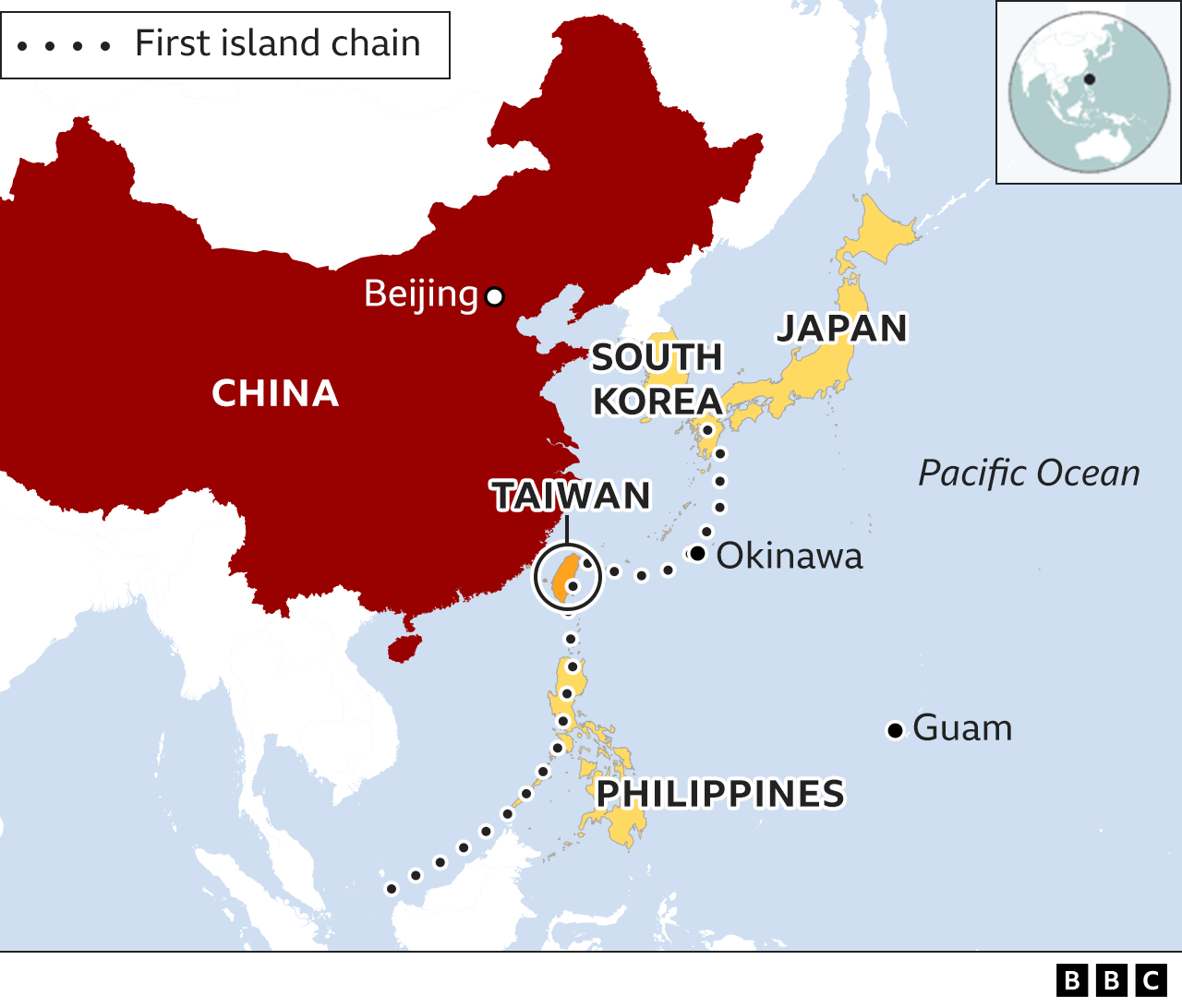
If China was to take over Taiwan, some western experts suggest it could be freer to project power in the western Pacific region and could possibly even threaten US military bases as far away as Guam and Hawaii.
But China insists that its intentions are purely peaceful.
Has Taiwan always been separate from China?
Historical sources suggest that the island first came under full Chinese control in the 17th Century when the Qing dynasty began administering it. Then, in 1895, they gave up the island to Japan after losing the first Sino Japanese war.
China took the island again in 1945 after Japan lost World War Two.
But a civil war erupted in mainland China between nationalist government forces led by Chiang Kai-shek and Mao Zedong’s Communist Party.
The communists won in 1949 and took control in Beijing.
Chiang Kai-shek and what was left of the nationalist party – known as the Kuomintang – fled to Taiwan, where they ruled for the next several decades.
China points to this history to say that Taiwan was originally a Chinese province. But the Taiwanese point to the same history to argue that they were never part of the modern Chinese state that was first formed after the revolution in 1911 – or the People’s Republic of China that was established under Mao in 1949.
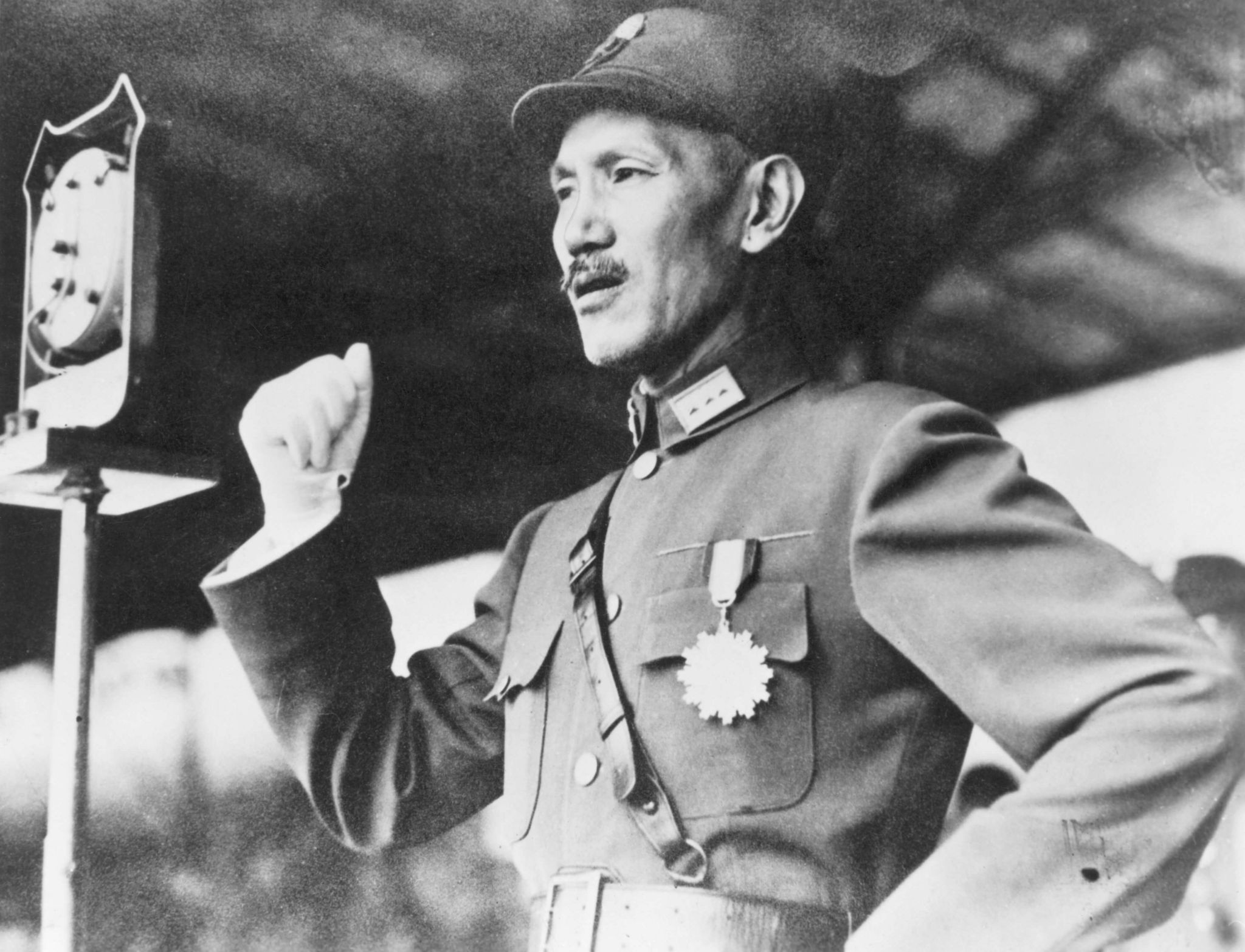
The Kuomintang has been one of Taiwan’s most prominent political parties ever since – ruling the island for a significant part of its history.
Currently, only 13 countries (plus the Vatican) recognise Taiwan as a sovereign country.
China exerts considerable diplomatic pressure on other countries not to recognise Taiwan, or to do anything which implies recognition.


 Users Today :
  Users Yesterday :
  This Month :
  This Year :
  Total Users : 1435721
 Views Today :
  Total views : 5000
 Who's Online :