


BBC News:
With fresh cracks appearing on the ground, the Himalayan town of Joshimath in northern India continues to make headlines. Why the town is sinking remains a subject of debate. But scientists say there is a bigger disturbing picture unfolding in the Himalayas.
They say the pace at which China and India are building infrastructure across the Himalayan region can significantly increase hazards and risks of natural disasters. Global warming is further destabilising the ecologically fragile region as rising temperatures continue to melt glaciers and permafrost (permanently frozen land).
And this is where highways are being carved, railway tracks are being laid, tunnels are being drilled, dams and airstrips are being built on both the sides of the Himalayas.
“So, basically you are bringing yourself closer and closer to the hazards” said Andreas Kaab, professor of physical geography and hydrology at Oslo University, who co-authored a major report on the cause of a devastating avalanche in Chamoli district of Uttarakhand state in 2021.
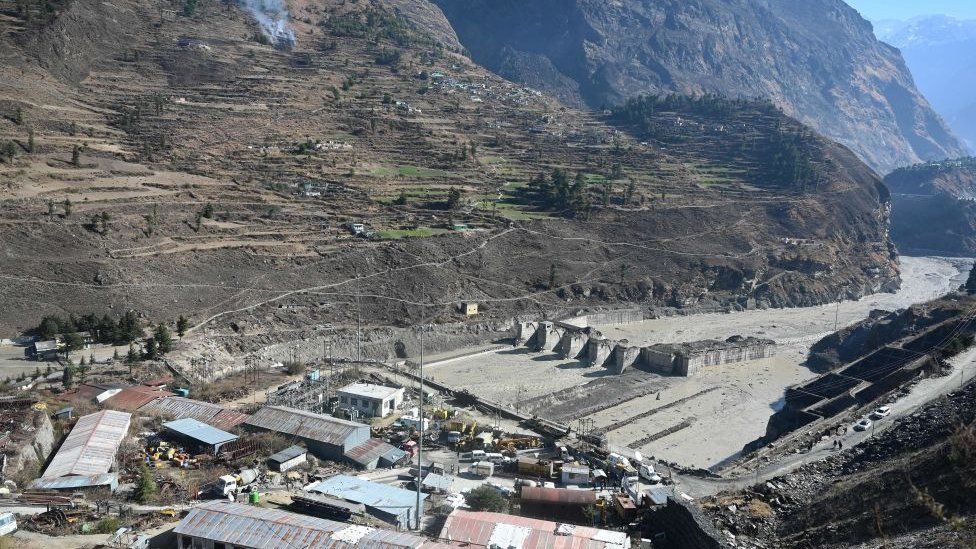
Studies have focused on individual events but when they are pieced together, they show increasing risks of hazards across the region – 3,500km (2,174 miles) of which China and India share as their de facto border, called the Line of Actual Control (LAC).
There was one partial or fully road-blocking landslide on every kilometre along the NH-7 national highway in Uttarakhand during September and October 2022, a study published in the Natural Hazards and Earth System Sciences said.
Other studies have also pointed at similar hazards.


 Users Today :
  Users Yesterday :
  This Month :
  This Year :
  Total Users : 1393534
 Views Today :
  Total views : 5000
 Who's Online :