

BBC:
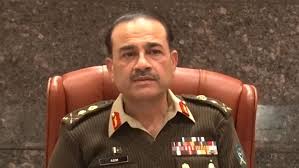
Pakistan’s army chief, General Asim Munir, is not known for seeking the spotlight.
Yet in recent weeks, it has found him – not only in Pakistan, but across the border in India and in diplomatic capitals far beyond.
His remarks on Kashmir – made just days before a militant attack in Indian-administered Kashmir which killed 26 people – have reignited a debate over Pakistan’s military stance and its role in rising regional tensions.
Kashmir, which India and Pakistan claim in full but administer only in part, has been a flashpoint between the countries since they were partitioned in 1947.
Though not directly linked to the violence, Gen Munir’s words have been dissected and interpreted as a shift towards a more confrontational tone, both from him and the institution he leads.
He is viewed as the most powerful man in Pakistan, where the military has long been blamed for interfering in politics, installing and removing governments. As tensions with India rise again, he is being watched as the central figure in a volatile nuclear-armed rivalry.
So who is Gen Munir? And what drives him?
Gen Munir, who is in his late 50s, is the son of a school principal and religious scholar. He joined the army through the Officers Training School in Mangla in 1986, earning the prestigious Sword of Honour given to the best-performing cadet. He was then commissioned into the 23 Frontier Force Regiment.
Over nearly four decades, Gen Munir has commanded troops along Pakistan’s sensitive northern borders near Kashmir, led its intelligence services and served in Saudi Arabia to bolster defence ties.
He holds a masters degree in public policy and strategic security management from the National Defence University in Islamabad and is also an alumnus of military institutions in Japan and Malaysia.
I first saw Gen Munir in Islamabad in 2023, at a packed hotel hall filled with ministers, diplomats, generals and journalists. Dressed in civilian clothes, he moved with calm authority, scanning the room as he approached the podium.
He opened his speech with a recitation from the Quran, reflecting his rare status as a hafiz – someone who has memorised Islam’s holy book in its entirety – among Pakistan’s military elite.
In person, Gen Munir seemed soft-spoken and polite. On stage, he was stern, with the sharp gaze of a former spymaster. A man trained to watch, listen and wait. Now, his words are echoing beyond Pakistan.
Gen Munir became Pakistan’s chief of army staff in November 2022, stepping into the role amid a perfect storm of political upheaval, an economic crisis and public disillusionment with the military’s role in governance.
His appointment followed months of speculation, largely because of his fallout with the then-prime minister Imran Khan.
Gen Munir had served just eight months as the chief of Pakistan’s Inter-Services Intelligence (ISI) spy agency before being removed by Khan in what many believe was a deeply personal and political move – though both sides deny this. That moment remains a turning point in their relationship.
Today, Khan is serving a sentence in jail and Gen Munir is the most powerful man in the country.
Gen Munir is regarded by many commentators as differing in temperament and approach from his immediate predecessor, Qamar Javed Bajwa.
Gen Bajwa was more public-facing, supported backchannel diplomacy with India and handled a major escalation of tensions between the countries in 2019 with caution.
Under what came to be known as the “Bajwa Doctrine”, he increasingly emphasised regional stability and geo-economics alongside traditional security priorities.
After a suicide bomb attack on troops in Indian-administered Kashmir at Pulwama in 2019, Gen Bajwa oversaw Pakistan’s military response to Indian air raids but refrained from escalation, returning Indian pilot Abhinandan Varthaman and helping avert a full-blown war.
“Bajwa was clear,” says Abdul Basit, senior fellow at Singapore’s S Rajaratnam School of International Studies.
“He had diplomatic channels open and was managing multiple fronts like Kashmir, Afghanistan and the US withdrawal from Afghanistan with pragmatism,” he said, adding that Gen Munir “is under immediate, intense pressure to act”.
“He has come in with unfinished business to stabilise the country’s security situation internally… The problems he faces (rising terrorism, political instability, an economic crisis, regional tensions) are urgent and worsening. He cannot afford long, drawn-out strategies like his predecessor Bajwa could. He needs quicker, firmer responses – both at home and abroad.”


 Users Today :
  Users Yesterday :
  This Month :
  This Year :
  Total Users : 1434545
 Views Today :
  Total views : 5000
 Who's Online :