

CNN:
For decades, wealthy Gulf Arab states cast themselves as oases of stability in a region mired in conflict, building gleaming capitals with fast-growing economies powered by millions of foreign workers drawn to economic opportunity and a tax-free lifestyle.
But this year, their sense of safety was shattered when two regional powers conducted a direct strike on a Gulf country for the first time. First, Iran targeted an American airbase in Qatar in June after the US struck its nuclear facilities. Then came Israel’s attack this week, targeting Hamas’ political leadership in Doha.
Gulf Arab states are rattled as a Gaza war that began thousands of miles from their borders nearly two years ago inches closer to home.
With few viable military options to retaliate, Qatar has vowed a “collective” regional response to Israel’s strikes. That response is currently “under consultation and discussion” with other partners, Qatari Prime Minister Sheikh Mohammed bin Abdulrahman Al Thani told CNN’s Becky Anderson on Wednesday. A decision is expected at an Arab and Islamic summit in Doha this weekend.
Perhaps the most visible and immediate reaction came from the Gulf state that has the closest ties to Israel: the United Arab Emirates. UAE President Mohammed bin Zayed Al Nahyan arrived in Doha with a large delegation less than 24 hours after the attack. Qatar was his first stop on a Gulf tour to coordinate a response to the attack that also took him to Bahrain and Oman. On Friday, the UAE summoned an Israeli diplomat to denounce what it called Israel’s “blatant and cowardly” attack.
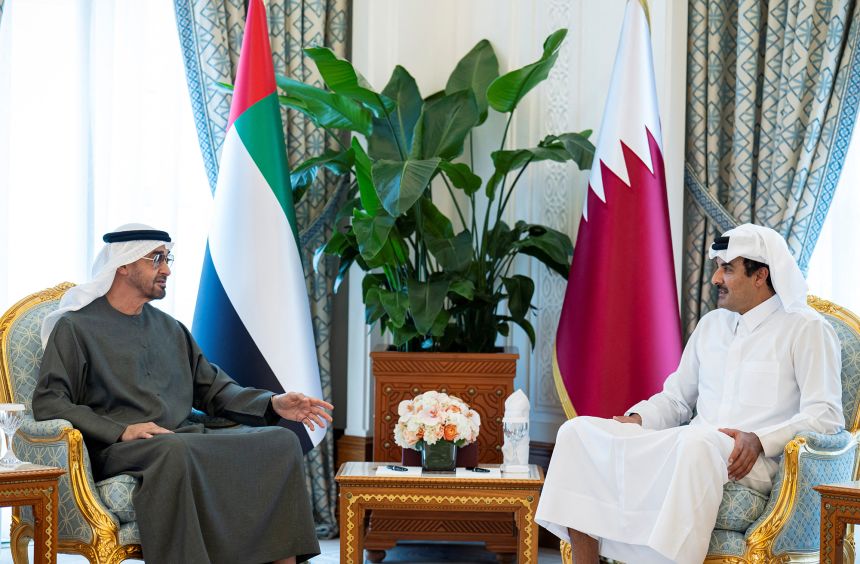
Sheikh Mohamed bin Zayed Al Nahyan, President of the United Arab Emirates, meets Sheikh Tamim bin Hamad Al Thani Emir of Qatar, at the Amiri Diwan, in Doha, Qatar, September 10, 2025. Abdulla Al Neyadi/Handout/Reuters
Regional analysts told CNN that Gulf Arab states would likely be weighing options that demonstrate regional unity and deter further Israeli strikes, but could be constrained by limited viable options.
“We need to take a stand now because if (we) do not, it will be other Gulf capitals next,” said Bader Al-Saif, an assistant professor of history at Kuwait University, referring to Gulf nations.


 Users Today :
  Users Yesterday :
  This Month :
  This Year :
  Total Users : 1390479
 Views Today :
  Total views : 5000
 Who's Online :