

BBC:
For a first-time visitor, landing in India’s financial capital Mumbai can be quite an experience.
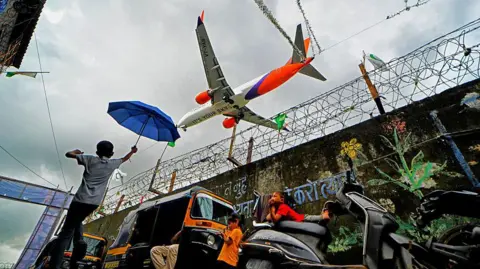
At approach, as the flight cuts across the Arabian Sea and flies past the mangrove marshes, the great metropolis emerges – swarming with railway tracks, towering skyscrapers and the dense habitation of Asia’s largest shantytown pressed tightly against the airport’s periphery wall.
For years, aviation experts have flagged the dangers and inefficiencies of operating an overworked airport right in the middle of such an urban setting, with buildings obstructing the flight path and safety and operational constraints preventing pilots from using the intersecting runways at once.
But a long overdue alternative is finally on the horizon.
After numerous delays and impediments, the Navi Mumbai International Airport (NMIA) is set for inauguration soon and expected to get operational in the coming months.
The airport will “significantly ease congestion” in India’s financial capital, Arun Bansal, the CEO of Adani Airport Holdings Limited, the operating company, told the BBC.
“The current airport has hit its capacity of 55 million passengers annually. There’s already demand for an additional 20 million and we are set to meet that at Navi Mumbai,” said Mr Bansal.
While numerous connectivity, integration and policy related hurdles still need to be ironed out, the airport’s opening will turn a significant new chapter in India’s aviation ambitions.
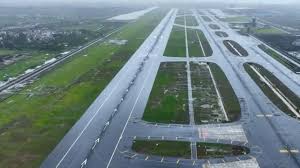
Spread over 1,100 hectares and located some 40km (24 miles) from the old commercial centre of Mumbai, the sprawling new airport is connected to the island city by India’s longest sea-bridge. It has two parallel runways and will eventually handle 90 million passengers per year, following subsequent phases of expansion.
“NMIA will make Mumbai the first large Indian city to operate two airports – a demonstration of the growing importance of India as an aviation market with rapidly increasing passenger and air traffic,” said Shukor Yusof of Singapore-based Enadu Analytics.
The sector has seen double-digit growth in the last four years – outpacing most other regions in the world. Indian airlines have placed orders for some 1,900 new aircraft, a thousand of which are expected to be delivered in the next five years, making such infrastructure critically important to accommodate this new fleet.
Adani says NMIA will be India’s first fully digital airport that’s been “designed and developed specifically to become a hub airport” with advanced technology for check-in, security, baggage and boarding drastically reducing turnaround times and facilitating easy transfers.
It has already announced a partnership with India’s largest and newest carriers, Indigo and Akasa Airlines, who are launching new routes. And Air India has committed to flying to 15 cities from the airport, gradually scaling up operations, including flights to international destinations.
Given how starved Mumbai’s current airport is for capacity, analysts expect strong uptake for NMIA’s parking slots from airlines looking to launch new routes.
But major challenges are expected as operations commence in the coming months.


 Users Today :
  Users Yesterday :
  This Month :
  This Year :
  Total Users : 1432532
 Views Today :
  Total views : 5000
 Who's Online :