

BBC:
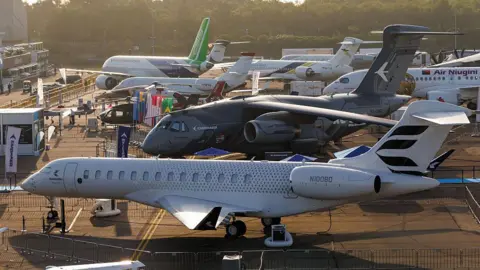
At the Singapore Airshow, the exhibition halls are lined with scale models, mock cockpits, and interactive displays showing the latest commercial jets and aviation technology.
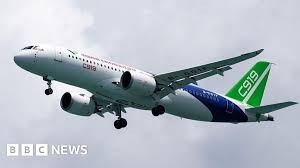
One booth is drawing particular attention: Comac, China’s state-owned planemaker, which has made significant strides since its C919 passenger jet flew to Singapore in its first trip outside of Chinese territory two years ago.
The plane is designed to compete with the Airbus A320neo and Boeing 737 MAX and is increasingly targeting markets beyond China.
In its own words “Comac is setting sights on the Southeast Asian aviation market”.
For the company, the airshow is a chance to position itself as a potential rival to Airbus and Boeing in Asia-Pacific, the world’s fastest-growing aviation market, at a time when airlines are grappling with delivery delays and stretched supply chains.
“I think in time, Comac will be a global competitor… but it’s going to take them time,” Willie Walsh, director general of the International Air Transport Association (IATA) told the BBC.
“I think 10 years, 15 years from now, we’ll be talking about Boeing, Airbus and Comac… But without question, they will be a considerable player in the future.”
There is certainly a need for another planemaker in Asia Pacific, analysts say.
Airlines in the region are feeling the strain from delivery delays at Boeing and Airbus, compounded by a shortage of engines and broader supply chain bottlenecks.
Uncertainty over tariffs and trade tensions has further complicated challenges for the manufacturing sector, affecting procurement and growth strategy in the region.
IATA data shows that global carriers are waiting longer than ever for new aircraft, pushing the average fleet age up and increasing operating costs because older planes are less fuel efficient.
Walsh said that Asia Pacific airlines could see double digit growth in 2026 if planes were available. “It’s incredibly frustrating for airlines. The wait between making an order and taking delivery is about seven years,” he said.
This is why Comac is emerging as another option for many Asia Pacific airlines.
The company says it has delivered more than 200 C909 and C919 jets, with around a quarter of those planes being operated by airlines in Laos, Indonesia and Vietnam. Brunei’s GallopAir has placed a large order for the firm’s aircraft, and Cambodia is also planning to buy around 20 planes.
“We need more suppliers in the supply chain,” said Subhas Menon, director general of the Association for Asia Pacific Airlines (AAPA). “The problem with this industry is that the supply chain is an oligopoly and sometimes even a duopoly.”
“We have been waiting for this for a long time. Comac is a welcome introduction. We need more suppliers in the Asia Pacific especially.”
The company is in a good position with strong government support, and lower prices can make its aircraft appealing to budget airlines in emerging markets.
“In the future we welcome all newcomers. We are keen to see more competition. Comac has got its certification process to go through and at some point in the 2030s, we see that it will be an offering that would be attractive to ourselves and other carriers,” Mike Szucs, chief executive of low-cost Philippines carrier Cebu Pacific told the BBC.


 Users Today :
  Users Yesterday :
  This Month :
  This Year :
  Total Users : 1393026
 Views Today :
  Total views : 5000
 Who's Online :