

BBC:
The walls of Dhaka University are screaming again.
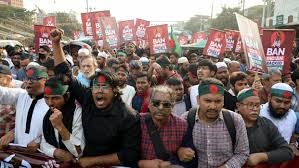
Graffiti – angry, witty, sometimes poetic – sprawls across walls and corridors, echoing the Gen Z-led July 2024 uprising that toppled Sheikh Hasina after 15 years in power. Once Bangladesh’s pro-democracy icon, critics say she had grown increasingly autocratic. After her resignation, she fled to India.
Students gather in knots, debating politics. On an unkempt lawn, red lanterns sway above a modest Chinese New Year celebration – a small but telling detail in a country where Beijing and Delhi are both vying hard for influence. For many here, the election scheduled for 12 February will be their first genuine encounter with the ballot box.
Nobel peace-prize laureate Muhammad Yunus took charge days after Sheikh Hasina’s fall. Hasina now lives in exile in Delhi, which has refused to return her to face a death sentence imposed in absentia over the brutal security crackdown in 2024 – violence in which the UN says around 1,400 people were killed, mostly by security forces.
Her Awami League – the country’s oldest party, which commanded some 30% of the popular vote – has been barred from contesting. Analysts say the main opposition Bangladesh Nationalist Party (BNP) is now moving to occupy the liberal-centrist space it has vacated. The main Islamist party, Jamaat-e-Islami, has joined forces with a party born out of the student uprising.
But the slogans on the campus – and beyond – are not only about democracy at home. It increasingly points across the border.
“Dhaka, not Delhi” is splashed on walls – and stitched onto saris, a traditional dress for women in South Asia. Among the young, “hegemony” has slipped into everyday speech, shorthand for India’s long shadow over Bangladesh.


 Users Today :
  Users Yesterday :
  This Month :
  This Year :
  Total Users : 1402155
 Views Today :
  Total views : 5000
 Who's Online :