

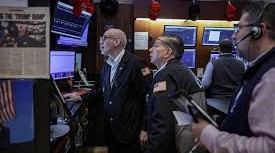
(Reuters)
LONDON/NEW YORK/SINGAPORE, March 30 – The war in Iran has sparked chaos across financial markets, leaving some investors and market makers reluctant to take on risk, making trading harder and costlier – a scenario regulators watch closely.
None of the world’s biggest markets, from U.S. Treasuries, to gold, to currencies have been spared, investors and traders said. In Europe, hedge funds, which now dominate bond trading, added to those dynamics as they rapidly unwound a number of bets this month.
Investors say they have at times struggled to get prices, or execute trades over the past four weeks, as market makers fear being stuck with large positions that could quickly become unprofitable.
“When we try to trade, it takes longer to trade. (The market makers) want us to be more patient, cut the trades into smaller sizes,” Rajeev De Mello, chief investment officer at GAMA Asset Management, said, adding gaps had widened between the price at which market makers would buy an asset and at which they would sell it. “What that has as a consequence is that everybody’s reduced the sizes of their positions.”
Various measures of volatility have soared to levels seen in previous market crises, including those for stocks (.VIX), opens new tab, bonds (.MOVE), opens new tab, oil (.OVX), opens new tab and gold (.GVZ), opens new tab.
Cracks have emerged even in the usually deep and liquid government bond markets, a cornerstone of global finance that has been hit hard as inflation risks spook investors.
The difference between bid and ask prices on newly issued two-year U.S. Treasuries, a key measure of market depth and transaction cost for the most widely traded securities, has meanwhile widened roughly 27% in March, compared with February levels, according to Morgan Stanley, suggesting dealers are charging a higher premium to take on risk.


 Users Today :
  Users Yesterday :
  This Month :
  This Year :
  Total Users : 1433446
 Views Today :
  Total views : 5000
 Who's Online :