

Al Jazeera:
Israel has launched more than 50 strikes across Lebanon in the past 24 hours, raising fears that the escalating violence could unravel the fragile ceasefire between the United States and Iran, reigniting a broader regional conflict.
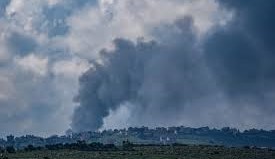
Lebanon’s National News Agency said an Israeli air strike on the southern town of Hanawya killed one person and wounded another on Friday. The agency also reported that Israeli forces destroyed residential areas in Aita al-Shaab, with additional strikes on al-Majadel in the Tyre district.
Al Jazeera’s team on the ground reported that Israeli forces blew up homes in the town of Haneen in southern Lebanon.
The Lebanese group Hezbollah responded by firing rockets towards settlements in northern Israel, including Kiryat Shmona, Metula and Misgav Am. In a statement posted on Telegram, fighters said “these attacks would continue until the Israeli-American aggression against the country and the people stopped”.
Despite the escalation in the south, Al Jazeera’s Zeina Khodr reported a relative lull in Beirut, following Israel’s large-scale assault on Wednesday. It killed at least 300 people and wounded about 1,000 others.
“What we’ve noticed in the past 24 hours or so is that the tempo of Israeli strikes has been reduced, at least in the Beirut area,” Khodr said.
“Yes, there’s still military activity in the south of Lebanon but really a marked reduction in strikes in Beirut – whether or not this is intentional or not. But the Israeli media is making it clear, and quoting Israeli officials, that there is US pressure on the Israeli government to de-escalate this conflict in Lebanon,” she added.
The pressure to end the conflict comes amid food security warnings from the United Nations World Food Programme.
“What we’re witnessing is not just a displacement crisis, it is rapidly becoming a food security crisis,” said WFP’s Lebanon country director Allison Oman, speaking via video link from Beirut on Friday.
She warned that food is becoming increasingly unaffordable due to rising prices and higher demand from displaced families, and as the Iran war disrupts supply routes.


 Users Today :
  Users Yesterday :
  This Month :
  This Year :
  Total Users : 1418273
 Views Today :
  Total views : 5000
 Who's Online :