

BBC:
On a weekday evening last month, Mumbai’s southbound Aqua Line metro train nearly emptied out a couple of stops before the final one.
On de-boarding, the last station bore the look of a desolate Soviet-era structure rather than a bustling train terminal in a city where crowds typically jostle for space.
Aqua Line is the city’s new fully underground metro train connecting the old business district of Cuffe Parade to newer commercial hubs like BKC and the airport terminals in the northern suburbs. It opened last year.
The 33.5km (20.8 miles) corridor was expected to ease congestion in India’s financial capital and projected to carry nearly 1.5 million passengers every day. The actual numbers are about a tenth of that, as per various estimates.
“Not a lot of people are using the line. It’s too expensive,” a ticketing executive told the BBC at Cuffe Parade station.
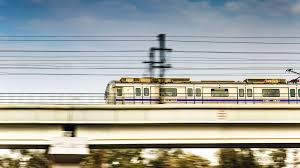
The low ridership on this corridor is part of a broader trend confronting the breakneck expansion of India’s metro network.
Since 2014, the Narendra Modi government has splashed out over $26bn on building metro connectivity across nearly two dozen Indian cities.
The network has grown fourfold from under 300km to more than 1,000km by 2025. Average daily ridership has also almost quadrupled from three million to over 11 million people in the last decade.
But these grand aggregate numbers mask worrying underlying data.
Most metro systems in India have failed to achieve even a sliver of the ridership projected during their planning stages, according to experts.
An Indian Institute of Technology Delhi report from 2023 showed ridership of merely 25-35% of the projected figures across corridors. And these numbers are unlikely to have significantly changed over 2024 and 2025, one of the study’s authors told the BBC.
Other studies corroborate these findings.
According to the Observer Research Foundation (ORF) think tank, ridership in some tier-3 cities such as Kanpur was as low as 2% of the projected estimate, while in the southern Indian city of Chennai it was 37% for the first phase.
Data shared with the BBC by the Institute for Transportation and Development Policy (ITDP) also revealed actual ridership of between 20-50% in cities such as Pune and Nagpur in western India.
Capital Delhi, which has India’s widest metro network, is perhaps the only exception where usage has slightly surpassed projections.
However two transport experts – Aditya Rane of ITDP and Ashish Verma of Sustainable Transportation Lab at the Indian Institute of Science in Bengaluru – told the BBC that this is because Delhi has begun to count interchanges as separate trips.


 Users Today :
  Users Yesterday :
  This Month :
  This Year :
  Total Users : 1428477
 Views Today :
  Total views : 5000
 Who's Online :