

(Reuters)
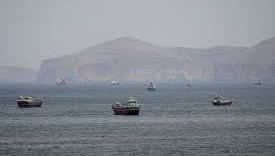
WASHINGTON/DUBAI/ISLAMABAD, April 23 – Iran seized two ships in the Strait of Hormuz as it tightened its grip on the strategic waterway after U.S. President Donald Trump announced he was indefinitely calling off attacks, with no sign of peace talks restarting.
The status of a two-week-old ceasefire, due to have expired earlier this week, remained unclear. In a sharp about-face hours after threatening renewed violence, Trump made what appeared to be a unilateral announcement on Tuesday that the U.S. would extend a ceasefire until it had discussed an Iranian proposal in peace talks to end the two-month-old war.
But Iranian officials did not say they had agreed to any extension of the truce, and criticized Trump’s decision to maintain the U.S. Navy blockade of Iran’s trade by sea, itself considered by Iran an act of war. Iran’s parliament speaker and lead negotiator Mohammad Baqer Qalibaf said a full ceasefire only made sense if the blockade was lifted.
Reopening the Strait of Hormuz, the slender chokepoint that carried a fifth of the world’s oil trade before the war, was impossible with such a “flagrant breach of the ceasefire,” Qalibaf said on social media.
“You did not achieve your goals through military aggression and you will not achieve them by bullying either,” he wrote in his first response to Trump’s announcement. “The only way is recognizing the Iranian people’s rights.”
In another wartime shakeup at the Pentagon, Navy Secretary John Phelan has been fired, a U.S. official and a person familiar with the matter said on Wednesday. The move came just weeks after Defense Secretary Pete Hegseth ousted the Army’s top general.
The Pentagon said Phelan was leaving the administration “effective immediately,” but did not provide a reason or say whether it was his decision to go.
Trump has again backed away from his repeated threats to bomb Iran’s power plants and other civilian infrastructure, which the United Nations and others warn would violate international humanitarian law. But little progress has been made in ending the war that started with joint U.S.-Israeli attacks on Iran on February 28.
That leaves the two sides in a holding pattern with the crucial Strait of Hormuz still effectively shut, straining economies across the world. Thousands of people have been killed across the Middle East, mostly in Iran and Lebanon, where the Iran-allied Hezbollah militant group joined the fighting against Israel.


 Users Today : 1230
 Users Yesterday : 3438
 This Month : 12470
 This Year : 566264
 Total Users : 1278080
 Views Today : 1498
 Total views : 3352314
 Who's Online : 17