

(Reuters)
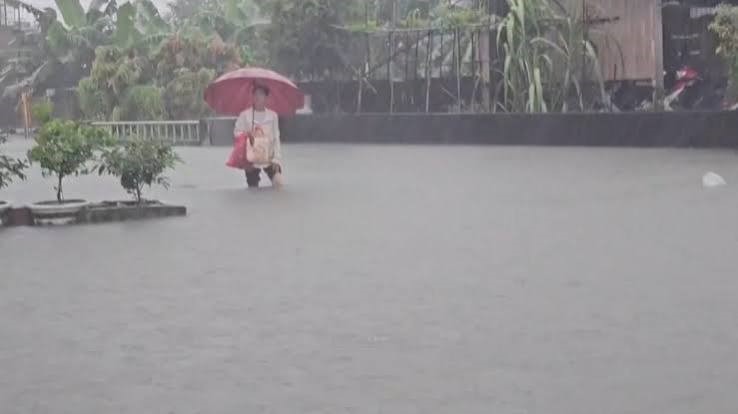
TAIPEI/TOKYO, June 26 – Torrential rains from a passing tropical storm shut down a swathe of southern and parts of northern Taiwan on Friday, leaving more than 5 million people off work or school, while neighbouring Japan issued flooding and landslide warnings.
Typhoon Mekkhala, now a tropical storm and nearing southern Japan’s Ryukyu Islands, did not make direct landfall in Taiwan, but its outer bands have brought heavy rain to parts of the island, especially in Kaohsiung, Tainan and Pingtung in the south.
The governments of all three Taiwanese regions, where more than 5 million people live, ordered offices and schools closed on Friday. Severe flooding in Tainan shut down a section of the main north-south railway line.
The northern Taiwanese city of Hsinchu, home to the world’s largest contract chipmaker, TSMC (2330.TW), opens new tab, said that from noon (0400 GMT), it would also close offices and schools. TSMC did not immediately respond to a request for comment.
Heavy rain and strong winds also lashed wide areas of Japan, which issued high-level warnings for landslides, flooding and swollen rivers in parts of the western and southern regions, and an evacuation order for 2.2 million residents.
The Japan Meteorological Agency warned that a stationary seasonal rain front, combined with warm, moist air feeding into it, was causing intense rainfall, particularly across western Japan.
More than 200 flights were cancelled, dozens of train lines halted and many expressways closed, according to Japan’s land ministry. Toyota (7203.T), opens new tab suspended a factory in the southern region of Kyushu on Thursday afternoon through the first shift on Friday, with a decision for the second shift due later.
In Taiwan, no casualties have been reported but authorities in Hualien county are evacuating nearly 200 residents from two townships downstream of a rapidly filling barrier lake in the mountains.
Barrier lakes are formed when rocks, landslides or other natural blockages make a dam across a river, normally in a valley, blocking and holding back water, hindering or even stopping natural drainage.


 Users Today :
  Users Yesterday :
  This Month :
  This Year :
  Total Users : 1327151
 Views Today :
  Total views : 5000
 Who's Online :