

(Reuters)
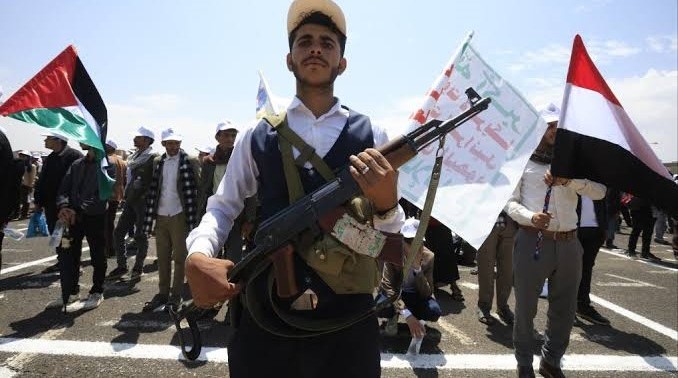
CAIRO, July 23 – The Iranian-aligned Houthis on Thursday claimed military strikes on two Saudi oil tankers as part of a naval blockade on Saudi Arabia, advancing toward a second chokehold on world oil supplies at the Red Sea in coordination with Iran’s attempt to control the Strait of Hormuz.
Meanwhile the U.S. military said on Wednesday it launched a new round of strikes on Iran at President Donald Trump’s direction, marking a 12th successive night of American attacks.
The Yemen-based militants, who control areas near the Bab el-Mandeb Strait on the opposite end of the Arabian Peninsula from the Strait of Hormuz, said on Monday they were imposing a naval blockade on Saudi Arabia in what some analysts have viewed as a tactical move by Iran to seek leverage.
Even before the renewed threats to shipping traffic in the Red Sea, Iran’s near-total blockade of the Strait of Hormuz had stoked inflation around the world, pushing up oil prices and squeezing U.S. gasoline consumers at a time when the unpopular war has put Trump’s Republican allies under pressure ahead of congressional elections in November.
Five tankers changed course in the Red Sea to avoid the Bab el-Mandeb Strait on Wednesday, and three tankers loaded with Saudi oil for China and India made U-turns on Tuesday.
Then the Houthis said their forces carried out missile and drone strikes on two Saudi oil tankers in the Red Sea, identifying them as the Encelia and the Layla.
A maritime security source said Encelia had transmitted a distress call, reporting it had been struck by a missile near the Saudi port of Jizan in the Red Sea late on Wednesday. British maritime risk management group Vanguard said the Saudi-flagged tanker was struck by an unknown projectile about 70 nautical miles southwest of Saudi Arabia’s Al Shuqaiq. The attack on the Layla remained unconfirmed.
Millions of barrels per day of Saudi oil have been heading to the kingdom’s Red Sea port of Yanbu to avoid the Strait of Hormuz. If shipments cannot pass through the Red Sea’s southern strait, they have only the northern route through the Suez Canal, adding weeks and costs to the journey.
Moreover, the Houthi threat to impose a naval blockade against Saudi Arabia could significantly widen the war and strain a U.S. military, current and former U.S. officials said.


 Users Today :
  Users Yesterday :
  This Month :
  This Year :
  Total Users : 1475433
 Views Today :
  Total views : 5000
 Who's Online :