

BBC:
Iran has denied Donald Trump’s claim that new talks on ending the conflict would begin on Monday, after the US president called off what he said would have been “massive” strikes on the country.
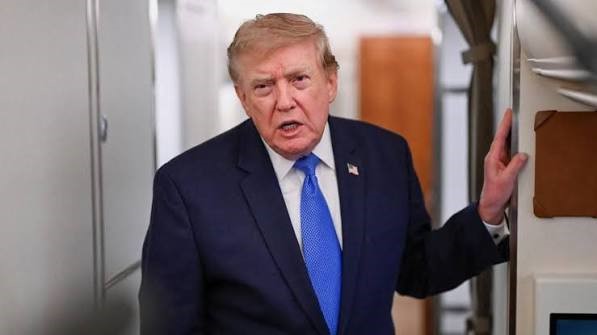
Speaking on board Air Force One on Sunday, he said Iran “knew the extent of the attack because they saw it forming”, adding: “We’re talking to them in the form of a negotiation. It begins tomorrow afternoon.”
In an earlier post on Truth Social, Trump said he had been asked by Iran and US allies in the Middle East to “hold off” as the “perimeters” of a deal had been agreed.
But on Monday Iran’s foreign ministry denied they were negotiating with the US, or that there were any plans to do so.
Spokesperson Esmaeil Baghaei added that Tehran was negotiating with Oman to reach “an understanding over a path to ensure the security of shipping passage through the Strait of Hormuz”.
Earlier talks between the US and Iran have been facilitated through mediators.
Trump has repeatedly vowed that a negotiated end to the war is near, only for tit-for-tat strikes to resume.
In his remarks on Air Force One, Trump declined to outline a deadline for a deal to be struck with Tehran, adding: “We’ll just see how it is. We’re ready to go anytime we want… I’m not looking to kill people.”
The US president did not specify where the talks on Monday would be held or who would attend.
Trump added that Saudi Arabia’s Crown Prince Mohammed Bin Salman – as well as US partners such as the United Arab Emirates and Qatar – had urged him against conducting strikes over the weekend.
“We were all set to go,” Trump said. “The reason they asked is [that] they think there’s a deal,” he said. “There’s a deal on Hormuz, and there will be a deal on the nuclear.”
Global oil prices fell on Monday morning in Asia trading after Trump’s announcement. Brent Crude oil was down by 4.5% at $83.98 (£62.26), while US-traded oil was 4.6% lower at $80.74 (£59.85).
Energy prices have fluctuated since the conflict started on 28 February as traders reacted to disruptions to shipping through the Strait of Hormuz.
Around 20% of the world’s crude oil and liquefied natural gas (LNG) usually flows through the strait.
Vessel-tracking data from trade intelligence company Kpler suggests commercial shipping through the strait has slowed.
According to the data, 51 vessel crossings occurred through the strait between 30 July and 2 August. This is a drop of around 28% compared to the previous 4 days, in which 71 crossings were recorded through the strait.


 Users Today : 3158
 Users Yesterday : 4331
 This Month : 10960
 This Year : 564754
 Total Users : 1276570
 Views Today : 3920
 Total views : 3350411
 Who's Online : 17