

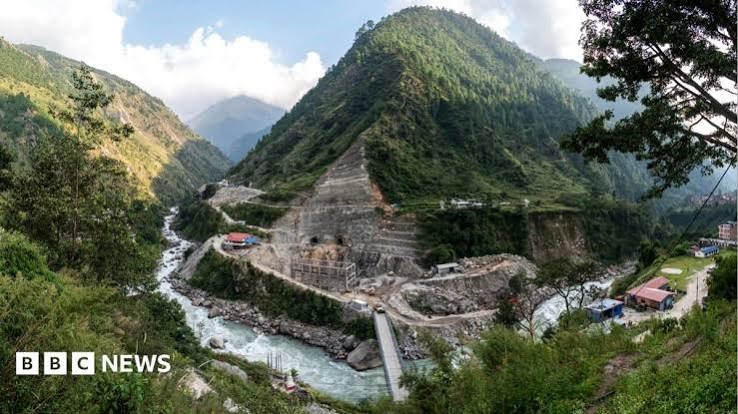
BBC:
Almost 100% of Nepal’s electricity comes from hydropower, and it produces so much it earns nearly $200m (£147m) each year exporting hydroelectricity to India and Bangladesh.
But the very glaciers and mountains giving Nepal this massive natural advantage are succumbing to global warming – and last Wednesday’s deadly floods have laid bare the risks to the nation’s hydropower ambitions.
More than 1,300 people were killed, while thousands more are still missing.
The floods, which destroyed entire villages near the border of Nepal and Tibet, severely damaged 12 hydropower plants in the Trishuli River basin and knocked out more than 10% of Nepal’s total power generation capacity. Operators tell the BBC they don’t yet know if any of these facilities can be brought back to operation.
The state-owned Nepal Electricity Authority, which owns six of the 12 damaged facilities, has assured Nepalese households that supply remains adequate. But its spokesman Rajan Dhakal acknowledges that with climate-related disasters becoming more frequent, “the time has come for a rethink of our hydropower policy”.
Only two-thirds of people in Nepal had access to electricity in 2010, and even connected households would face power cuts for up to 16 hours a day.
An expansion of hydropower infrastructure alongside efforts to tackle corruption and boost energy imports from India to fill seasonal gaps meant that by 2018, most of Nepal was enjoying 24 hours of power supply per day.


 Users Today :
  Users Yesterday :
  This Month :
  This Year :
  Total Users : 1426767
 Views Today :
  Total views : 5000
 Who's Online :