


BBC News:
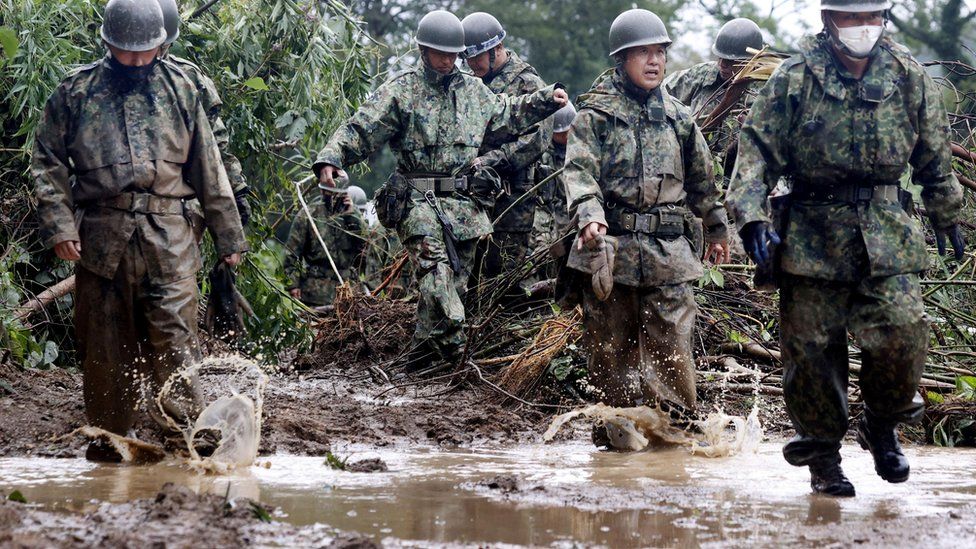
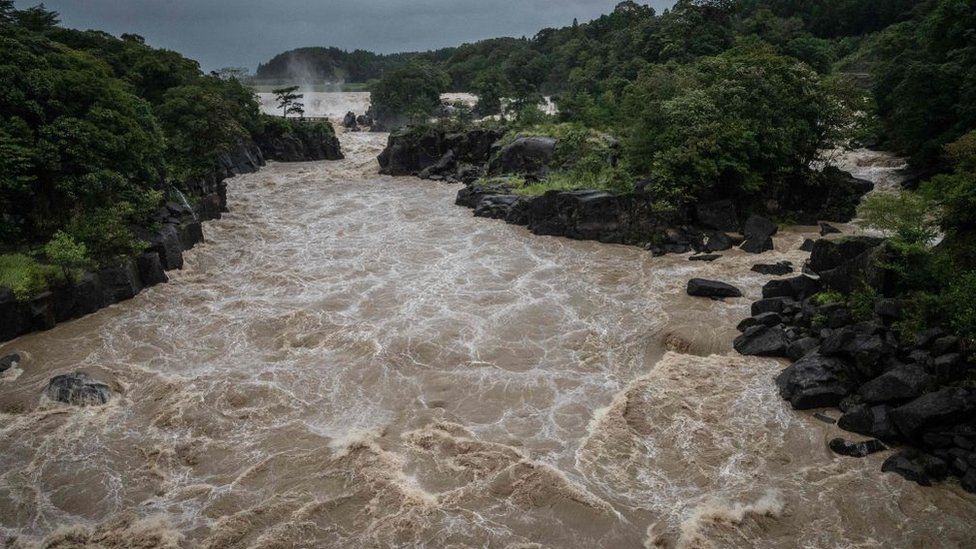
Rescue workers in Japan have warned of mudslides and flooding as one of the biggest storms in recent decades batters the country.
Typhoon Nanmadol has killed at least two people and injured 90 others since it made landfall on the southernmost island of Kyushu on Sunday morning.
Nine million people have been told to evacuate, and more than 350,000 homes are without power.
Forecasts predict up to 400mm (16 inches) of rain over the next 24 hours.
State broadcaster NHK said one man was killed when his car was submerged in flooding, and another died after being buried in a landslide. One more person remains missing, and reports say 87 others have been injured.
The super typhoon brought gusts of up to 234km/h (145mph), destroying homes, and disrupting transport and businesses. It’s equivalent to a category four or five hurricane.
The capital, Tokyo, experienced heavy rain, with the Tozai underground line suspended because of flooding. Bullet train services, ferries, and hundreds of flights have been cancelled; shops and businesses have shut. Local video footage showed roofs ripped off of buildings and billboards toppled over.
Prime Minister Fumio Kishida delayed a visit to New York, where he is due to give speech at the UN General Assembly, until Tuesday, to monitor the storm’s impact.
The storm is forecast to turn east and pass over Japan’s main island of Honshu before moving out to sea by Wednesday.
Scientists have predicted an active hurricane season this year, influenced by a natural phenomenon known as La Niña.
Warmer sea surface temperatures in the Atlantic and Caribbean as a result of climate change may also impact the frequency and intensity of hurricanes.


 Users Today :
  Users Yesterday :
  This Month :
  This Year :
  Total Users : 1393537
 Views Today :
  Total views : 5000
 Who's Online :