

BBC:
Fuel to the engines of the Air India plane involved in a deadly crash was cut off moments after takeoff, a preliminary report has found.
In recovered cockpit voice recordings, the report said one of the pilots can be heard asking the other “why did you cut off?”, to which they replied they “did not do so”.
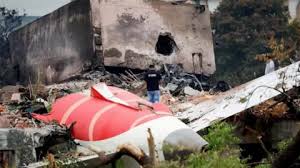
The London-bound Boeing 787-8 Dreamliner crashed less than a minute after taking off on 12 June from Ahmedabad airport in western India, killing 260 people, most of them passengers. One British national miraculously survived the crash.
An investigation led by India’s Aircraft Accident Investigation Bureau (AAIB) is ongoing, with a final, more detailed report expected in 12 months.
According to data from the flight recorder, both of the plane’s fuel control switches – usually used to turn the engine on or off when on the ground – were moved from the run to the cutoff position within seconds of each other, shortly after takeoff.
This caused both engines to lose thrust, the AAIB’s report said.
There is then confusion heard in the cockpit, with one pilot asking the other why they had switched off the fuel. The Gatwick-bound plane was being piloted by Captain Sumeet Sabharwal and co-pilot Clive Kundar. The report does not specify which voice is which.
The fuel switches were then moved back into their normal inflight position, automatically starting the process of relighting the engines. One engine, the report said, was able to regain thrust – but could not reverse the plane’s deceleration.
One of the pilots submitted a mayday call just before the plane plummeted and crashed into a building used as doctors’ accommodation, causing an explosion.
Both pilots had had an “adequate rest period prior” to the flight, the report said.
Experts had previously speculated that birds could have caused the crash, but the report said that “no significant bird activity” was observed in the vicinity of the plane’s flight path.
The report said: “At this stage of investigation, there are no recommended actions to B787-8 and/or GE GEnx-1B engine operators and manufacturers, suggesting that no significant fault has been found with the plane or its engines.”
While no conclusions are drawn and the report notes that investigations are ongoing, the focus appears to be on the actions of the pilots.
The preliminary investigation into the crash – one of the worst in recent aviation history – was led by the AAIB, with inputs from Boeing, engine-maker GE, Air India, and aviation regulators from India, the UK and the US.
Under International Civil Aviation Organization (ICAO) rules, preliminary reports should be filed within 30 days of a crash, although it isn’t mandatory to make them public.
The accident marked the first time a 787-8 Dreamliner suffered a fatal crash since entering service in 2011.
In the days following the crash, the aircraft’s Enhanced Airborne Flight Recorders (EAFRs) – or “black boxes” – were recovered from the debris, a crucial breakthrough for investigators looking to reconstruct the flight’s final moments.
These devices capture extensive flight data and cockpit audio – from pilot radio calls to ambient cockpit sounds.


 Users Today :
  Users Yesterday :
  This Month :
  This Year :
  Total Users : 1433761
 Views Today :
  Total views : 5000
 Who's Online :